

AME vs B.Tech Aeronautical Engineering: Which Should You Choose?
Aircraft Maintenance Engineering (AME) trains you to inspect, repair, and certify aircraft as airworthy under a DGCA license, while B.Tech Aeronautical Engineering is a four-year degree focused on aircraft design, aerodynamics, and propulsion theory. One leads to hands-on, license-based maintenance work; the other leads to design and research-oriented engineering roles.
Every year, a fresh batch of Class 12 students who’ve decided planes are their thing hit this exact fork in the road. Both options sound impressive, both involve aircraft, and from the outside, it’s genuinely hard to tell what separates them or which one leads to the career you’re actually picturing. This article breaks the two apart properly, using real comparisons instead of vague reassurance.
Key Takeaways
- AME is a license-based program regulated by DGCA; a B.Tech in Aeronautical Engineering is a full university-recognized engineering degree
- AME focuses on hands-on aircraft repair and troubleshooting; aeronautical engineering focuses on design, aerodynamics, and propulsion theory
- AME requires clearing a medical exam and a colour blindness test; a standard B.Tech does not
- AME often leads to faster, more predictable entry-level hiring since every operational aircraft legally needs licensed maintenance staff
- Aeronautical engineering offers a wider long-term ceiling, especially with an M.Tech or research-focused role
- Some institutes now offer a combined AME with B.Tech program, giving graduates both the license and the engineering degree
- Entry-level salaries for both paths sit in a similar ₹3 to ₹6 LPA range, with AME growing faster early and aeronautical engineering often climbing higher at senior, specialized levels
What Is Aircraft Maintenance Engineering?
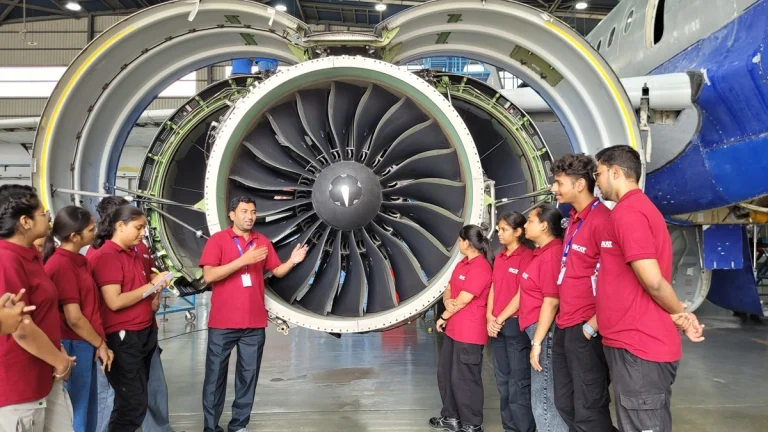
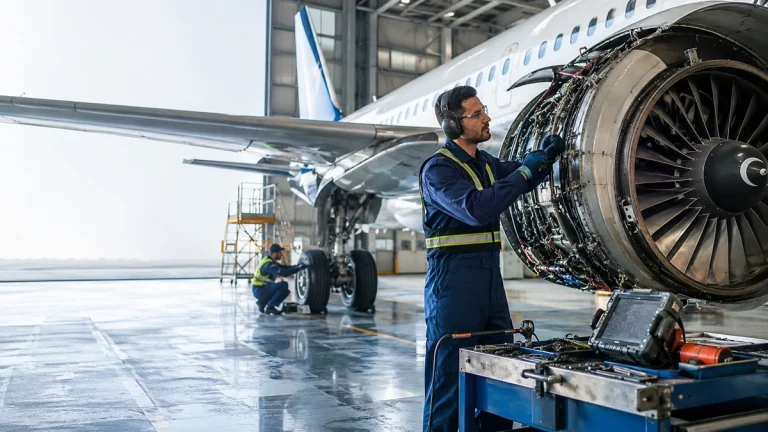
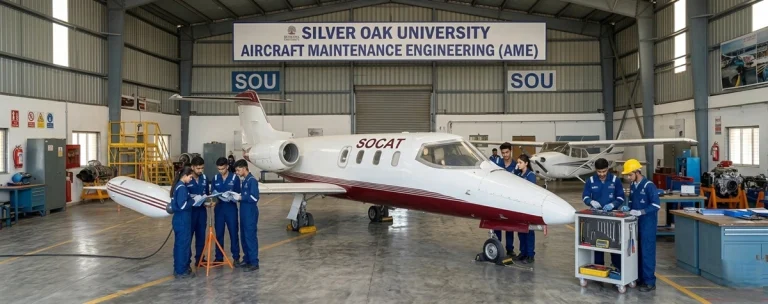
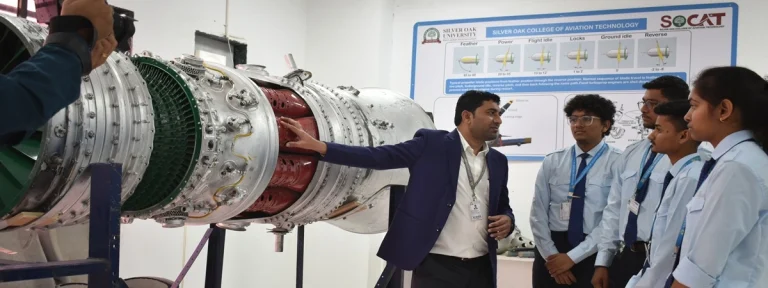
Aircraft Maintenance Engineering is a DGCA-regulated, license-based training program that qualifies you to inspect, troubleshoot, and repair aircraft systems, structures, and engines. It’s practical by design — a large share of the course happens in workshops with real aircraft components, not lecture halls.
Once licensed, an AME can legally sign off on repairs and certify an aircraft as safe to fly again, a responsibility that puts this role at the technical center of aviation safety.
What Is B.Tech Aeronautical Engineering?
A B.Tech in Aeronautical Engineering is a standard four-year engineering degree that covers aerodynamics, propulsion systems, aircraft structures, materials science, and flight mechanics. It leans toward theory, simulation, and design work rather than hands-on repair.
Graduates typically move into design, research, or structural analysis roles at aerospace manufacturers, rather than maintenance-floor work.
AME vs B.Tech Aeronautical Engineering: Quick Comparison
| Factor | Aircraft Maintenance Engineering (AME) | B.Tech Aeronautical Engineering |
|---|---|---|
| Type of qualification | DGCA-regulated license | University-recognized engineering degree |
| Focus | Hands-on maintenance, repair, troubleshooting | Design, aerodynamics, propulsion theory |
| Learning style | Workshop and practical-heavy | Classroom, lab, and simulation-heavy |
| Extra eligibility checks | Medical exam and colour blindness test required | Not typically required |
| Typical career start | Licensed engineer with airline or MRO | Design/R&D engineer at manufacturer |
| Entry-level salary (India) | ₹3 to ₹5.5 LPA | ₹3.5 to ₹6 LPA |
| Best suited for | Hands-on, practical problem-solvers | Theory-driven, design-focused thinkers |
What You’ll Actually Study in Each
Aircraft Maintenance Engineering Curriculum
- Aircraft systems, engines, and structures, studied with a strong troubleshooting focus
- Regulatory and safety standards specific to maintenance work
- Hands-on workshop training on actual aircraft components
- DGCA-mandated modules required before sitting for licensing exams
B.Tech Aeronautical Engineering Curriculum
- Aerodynamics and fluid dynamics — the physics behind lift and control
- Propulsion systems, covering jet and turbine engine theory
- Aircraft structures and materials science
- Flight mechanics, control systems, and design-focused coursework
Eligibility: What You’ll Actually Need
- AME: 12th grade with Physics, Chemistry, and Mathematics, or an equivalent engineering diploma, plus a general medical exam and a colour blindness test
- B.Tech Aeronautical Engineering: 12th grade with Physics, Chemistry, and Mathematics, generally with a minimum aggregate, followed by a relevant engineering entrance exam
Expert tip: Check the colour blindness requirement before you build your entire plan around AME. It’s an easy detail to overlook, and it’s non-negotiable for licensing.
Career Paths: Where Each One Actually Leads
After Aircraft Maintenance Engineering
- Licensed Aircraft Maintenance Engineer with an airline or MRO (Maintenance, Repair, and Overhaul) organization
- Line maintenance or base maintenance technician roles
- Quality assurance and safety compliance roles within aviation maintenance
- Specialized system-specific engineer roles — avionics, engines, or structures
After B.Tech Aeronautical Engineering
- Design and development engineer roles at aerospace manufacturers
- Aerodynamics or structural analysis roles, often simulation-supported
- Research and development positions, particularly with a postgraduate degree
- Flight test engineering, validating new aircraft designs alongside test pilots
Pros and Cons
Aircraft Maintenance Engineering
- Pros: Faster, more predictable hiring; license-driven job security; genuinely hands-on work
- Cons: Physically demanding at times; mandatory medical and colour blindness screening; career ceiling can feel narrower without further specialization
B.Tech Aeronautical Engineering
- Pros: Broader long-term ceiling; transferable engineering skills; strong foundation for further studies or research
- Cons: Entry-level roles can be more competitive; often needs a postgraduate degree to unlock the highest-value research and design positions
Common Mistakes Students Make
- Choosing AME purely because it sounds “quicker” without checking the medical and colour blindness requirements first
- Assuming a B.Tech automatically guarantees a design role at a major manufacturer straight out of college
- Not checking whether a college offers a combined AME with B.Tech format before ruling either path out entirely
- Comparing only the entry-level salary figure instead of long-term career trajectory and licensing value
Best Practices Before You Decide
- Talk to at least one working professional from each path before applying anywhere
- Confirm DGCA approval directly with the regulator’s published list, not just the college website
- Ask about combined AME plus B.Tech options if you’re still undecided
- Factor in whether you enjoy hands-on troubleshooting or theoretical problem-solving more, since that instinct predicts satisfaction better than salary numbers alone
Do AME and Aeronautical Engineering Overlap?
Yes, more than most students expect, especially at institutes offering the combined AME with B.Tech format. Graduates of these programs walk out with both a DGCA-recognized license and a full aeronautical or aerospace engineering degree, which noticeably widens their career options.
Instead of committing exclusively to maintenance work or purely design work, combined-program graduates can move between the two, or pursue roles that genuinely benefit from both skill sets, such as technical quality auditing or maintenance-focused engineering positions.
Salary Comparison: What to Realistically Expect
- Aircraft Maintenance Engineer (entry-level): ₹3 to ₹5.5 LPA, with steady growth as you accumulate license categories and experience
- Aeronautical Engineer (entry-level, design/R&D roles): ₹3.5 to ₹6 LPA, varying by employer size and project scope
- Mid-career, either path: ₹8 to ₹15 LPA, with specialized licenses or a postgraduate degree pushing this range higher
Which One Should You Actually Choose?
Choose AME If…
- You’d rather work hands-on with real aircraft than spend most of your time on theoretical design work
- You want a clearer, faster path to a licensed, in-demand qualification
- You enjoy troubleshooting under practical, safety-critical constraints
Choose B.Tech Aeronautical Engineering If…
- You’re more interested in how aircraft are designed and improved than how they’re repaired
- You’re considering further studies, like an M.Tech or a research-focused role
- You want broader engineering flexibility that could extend beyond aviation later
Consider a Combined Program If…
- You genuinely can’t decide and want both a license and a full engineering degree
- You want maximum flexibility to move between maintenance-focused and design-focused roles later
Frequently Asked Questions
Can an AME graduate later pursue a B.Tech, or vice versa?
Yes, though it usually means additional years of study either way. This is exactly why combined programs have become popular — they let students earn both qualifications together instead of adding one on top of the other later.
Is Aircraft Maintenance Engineering considered a degree or a diploma?
It’s typically structured as a licensing program regulated by DGCA rather than a traditional degree or diploma. Some institutes bundle it with a B.Tech for students who want both the formal engineering degree and the maintenance license together.
Which path has better long-term job security?
AME tends to offer more predictable, license-driven job security, since every operational aircraft requires certified maintenance staff regardless of broader hiring trends. Aeronautical engineering job security depends more on company project cycles and R&D funding.
Does colour blindness disqualify someone from both paths equally?
No. This requirement is specific to Aircraft Maintenance Engineering because of the hands-on, safety-critical nature of the work. A standard B.Tech in Aeronautical Engineering doesn’t carry the same medical or colour blindness testing requirement at admission.
Which course is shorter, AME or B.Tech Aeronautical Engineering?
AME programs are generally shorter and more focused, built around DGCA licensing timelines rather than a fixed four-year academic calendar. A standalone B.Tech follows the standard four-year, eight-semester engineering format.
Conclusion
AME and B.Tech Aeronautical Engineering aren’t competing versions of the same career. They’re genuinely different paths that happen to share a fascination with aircraft. One puts you hands-on with real planes, troubleshooting and repairing them under strict regulatory standards. The other puts you closer to the drawing board, working on how aircraft are designed, improved, and understood at a deeper engineering level.
If you’re still unsure which fits you better, think honestly about whether you’d rather be the person fixing what’s already flying, or the person figuring out how to make the next generation of aircraft fly better. That instinct, more than any comparison chart, usually points you toward the right answer.